
Journal · · 5 min read
Why one great AI image isn't a campaign
One great AI image gets noticed once. A campaign is one idea told across many frames, with the same light, palette, world and person, so that people start to recognise your brand in a feed without reading the name. If your images look great on their own but unrelated side by side, you have a gallery, not a campaign.
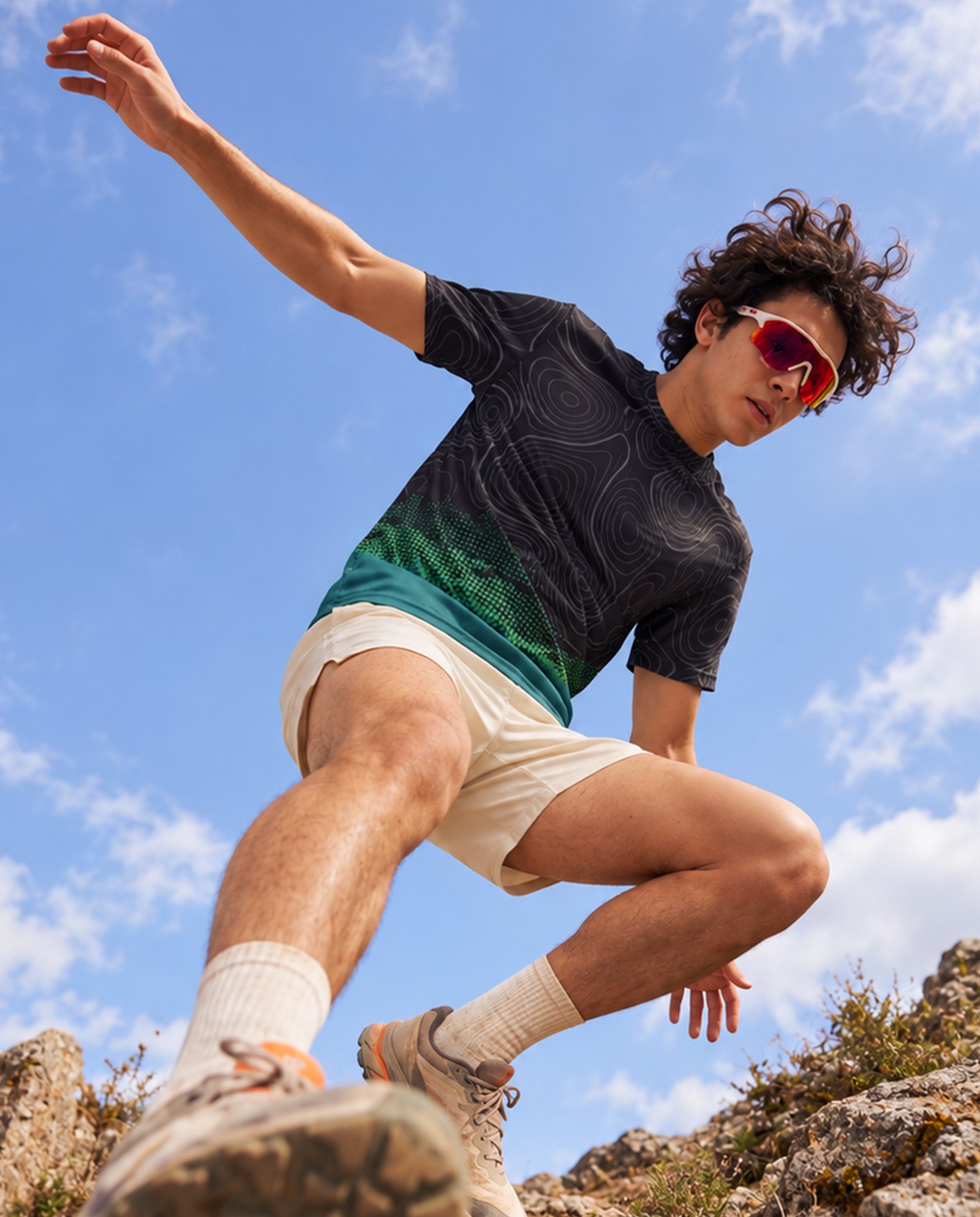
What is the difference between an image and a campaign?
An image answers "what does this product look like?" A campaign answers "what world does this brand live in?" The second question is the one that builds a brand, and you can't answer it in one frame.
A campaign is one idea, shot or made many ways. The light is the same kind of light. The palette repeats. The same person, or the same type of person, shows up again. The places feel like they belong to one map. Someone who sees your fourth ad should feel they have seen you before, even if they skipped the first three.
A run of great single images doesn't do that. Each one might be beautiful, but if one is golden-hour desert, the next is neon studio and the third is a snowy city street, they read as three different brands that happen to sell the same tee.
Why does consistency matter so much in a feed?
Because nobody studies your ad. They see it for a moment between a friend's holiday and a news clip, and they move on. Recognition has to happen in that moment, and it comes from repetition of things people can link to you.
Brand researchers call these distinctive assets. Jenni Romaniuk of the Ehrenberg-Bass Institute, as summarised by CreativeX, sets a bar of at least 50% of people linking an asset to the brand, and at least 50% linking it to that brand alone. You only get there by showing the same cues again and again. For a small apparel brand, those cues are usually a colour world, a type of landscape, a way of lighting and a recurring face.
The scale of what you are competing with is also changing. In its engineering write-up on Andromeda, its ad retrieval system, Meta says more than a million advertisers already use its generative AI tools and that they produced more than 15 million ads in a single month, and it expects the number of ad creatives in its systems to grow significantly. When the feed fills with generated images, a nice-looking picture stops being rare. Being recognisable becomes the advantage.
Why do AI images drift apart so easily?
Every generation starts fresh. Unless you control it, the model picks its own light, its own face, its own mountain. Ask for "trail runner in a performance tee" five times and you get five different runners in five different places, each one a reasonable average of what that phrase usually looks like.
That is fine for exploring. It is a problem for a campaign, because the drift is in exactly the details that make a brand: skin tone and age of the athlete, the colour temperature of the sky, whether the terrain is granite or red sandstone, whether the mood is effortful or polished. I wrote more about this in why automated ad tools miss your brand.
What should stay the same across every frame?
Before making anything, I write down what is fixed for the whole set. This is the short list I use:
| Keep fixed | What it looks like in practice |
|---|---|
| One idea | A single line the whole set illustrates, like "the hour after the climb" |
| Light | One time of day and weather, so shadows and sky agree |
| Palette | Two or three colours that come from the product and the place |
| Character | The same athlete, or a small cast that keeps returning |
| World | One kind of terrain and region, not a tour of the planet |
| Product | Every logo, zip, seam and print identical in every frame |
Then I let the things that should change, change: framing, distance, action, moment. A wide shot on the ridge, a close crop on the shoulder seam, a low angle mid-stride, a quiet moment at the top. Variety in the shots, consistency in the world.
How many images make a campaign?
There is no magic number, but one is never enough and you need enough frames for the idea to be seen several times. For a small brand running Meta ads, six images on one concept is a sensible start: enough for a hero, a few lifestyle frames and a detail or two, and enough to fill a carousel or rotate through placements without repeating the exact same picture.
What matters more than the count is that all of them could sit side by side on your homepage and look like one shoot. That is the test I use. Put the images in a grid at phone size. If one jumps out as being from somewhere else, it doesn't belong in this campaign, however good it is on its own.
Where does a strong single image still help?
A single image is the right tool for a product page, a quick test of a new colourway, or a one-off post. It is also how a campaign starts: you find the frame that feels most like the brand, and that frame sets the light, the palette and the person for everything after it. The mistake is stopping there and calling it a campaign.
I learned this shooting for an outdoor apparel brand over ten years, including on a 2018 Everest expedition. The images people remembered weren't the single best summit frame. They were the run of pictures that all felt like the same cold morning. You can read more about my background.
How does Cosmic Sandwich build a campaign?
I start from your existing product photos and set one concept and art direction for the set. AI handles the expensive production (the location, the model, the weather), and I control the light, palette and character across every frame, then hand-check each logo, zip, seam and print in Photoshop. You can see how one product photo becomes a campaign, and the activewear page shows the kind of work I make. If you plan to use Meta's own tools for resizing and motion, this post on Meta's AI ad creative explains how they fit on top.
If you want to see what one idea across six frames looks like for your product, start with a $200 test set: 6 images, one concept, within 3 days. The details are in the offer.
Quick answers
What is the difference between an AI image and an AI campaign?
An AI image is a single frame. A campaign is one idea repeated across many frames with consistent light, palette, setting and character, so the images read as one brand.
How many images does a small apparel brand need for one campaign?
There is no fixed number, but six images on one concept is a sensible start: a hero, a few lifestyle frames and a detail or two, enough to rotate through placements.
How do I keep AI campaign images consistent?
Decide what stays fixed before you generate anything: the idea, light, palette, athlete, terrain and exact product details. Vary only framing, distance and action, then review the set side by side at phone size.