
Journal · · 5 min read
Why clothes look wrong on the body in AI images
Clothes look wrong in AI images because the model has never worn anything: it knows what garments look like in photos, not how your fabric, at its weight and cut, hangs on a body that is moving. The fix is to give it real product photos from several angles and a short fit note, choose poses that suit the garment, and check every frame for drape, tension and length the way a designer checks a sample.
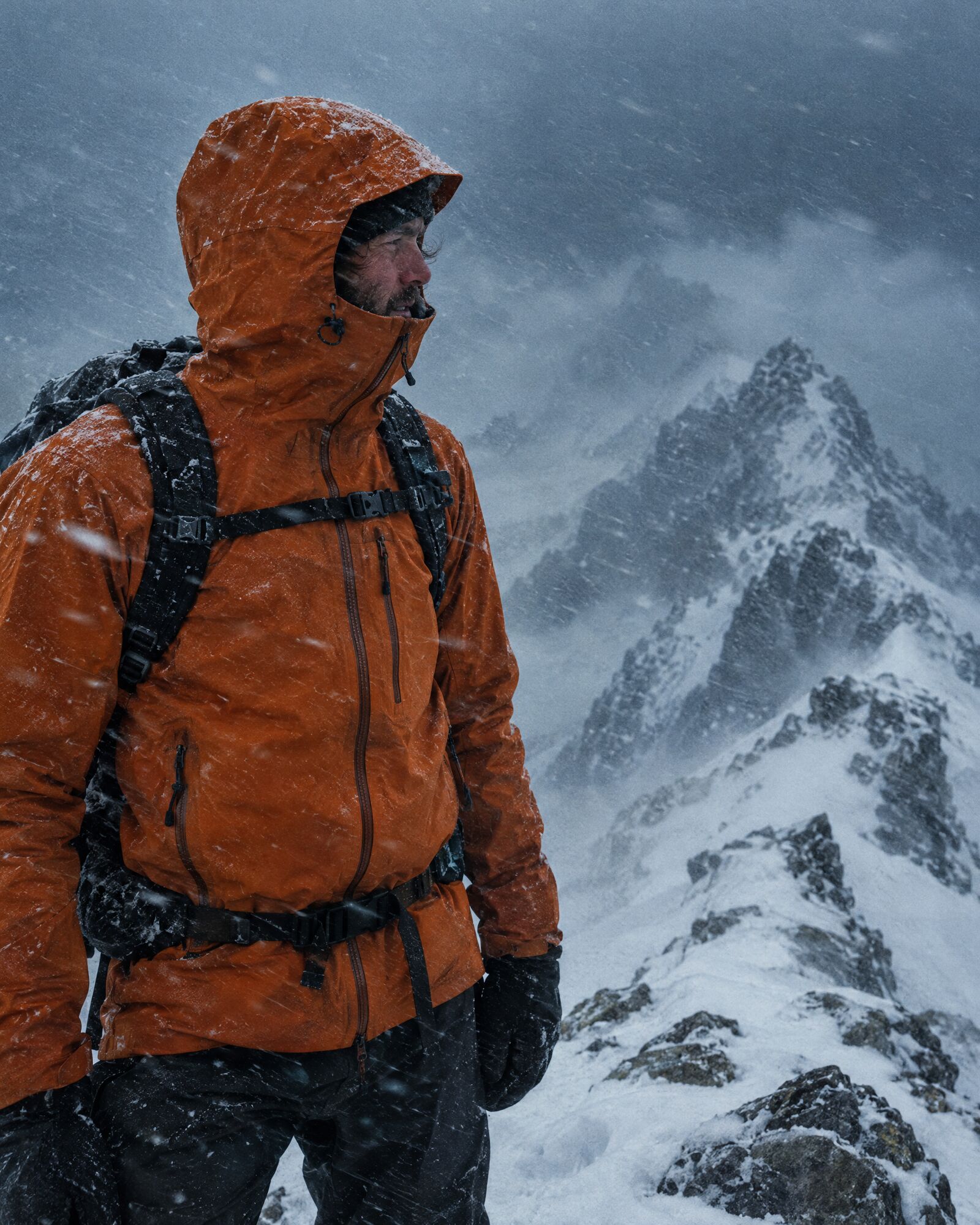
Why do clothes look wrong on AI models?
An image model has seen millions of photos of jackets, but it has never felt one. It knows what a shell usually looks like in a picture. It does not know that your shell is a stiff three-layer fabric that holds its shape in wind, or that your tee is a light, slightly stretchy knit that clings to a sweaty back. So it fills the gap with an average garment, and average is rarely your garment.
The starting photo makes this harder. Most brands hand over a flat lay or a ghost mannequin shot. Those are great for showing the product, but they carry almost no information about how it behaves on a body: where it pulls, where it folds, how long the sleeve sits when an arm reaches up. The model has to guess, and it guesses smooth and symmetrical.
What are the giveaways that a garment is wrong?
Once you know what to look for, you see them everywhere:
- Floating fabric. A hem or sleeve that hangs in the air as if the body inside it isn't there.
- No tension. A bent elbow or a reaching shoulder with no pull lines across the fabric. Real clothes strain where the body moves.
- The wrong stiffness. A hardshell that ripples like a cotton shirt, or a merino base layer with the heavy folds of a fleece.
- Gear that doesn't press. Backpack straps or a harness sitting on top of a jacket without compressing it.
- The wrong cut. A relaxed tee drawn slim and fitted, or a straight-leg pant tapered at the ankle, because that is the more common look in the training data.
- Sizing that drifts. The same jacket looking a size bigger in one frame than in the next.
Customers might not be able to name any of these, but they feel them. The image looks a little off, and "off" is the opposite of what you want next to a price.
Why does fit matter so much for an apparel brand?
Because fit is what people are actually trying to judge when they look at your ad. In a 2023 Coresight Research survey of 100 decision-makers at US apparel brands and retailers, size and fit was the top reason for online apparel returns, cited by 53% of respondents, well ahead of colour and damage.
An image can't fix sizing on its own. But an image that shows a boxy jacket as slim, or a cropped tee as full length, sets an expectation the product will not meet when it arrives. That gap is the last thing a small brand needs.
How should different garments actually sit on the body?
This is the quick reference I use when checking a set. Fabric weight and cut decide almost everything.
| Garment | How it should sit | What AI tends to get wrong |
|---|---|---|
| Hardshell jacket | Holds its shape, breaks in a few large creases, hood and shoulders keep structure in wind | Soft, many small wrinkles, fabric that looks like a windbreaker or a cotton coat |
| Insulated jacket | Baffles stay puffy, compress under pack straps and at the elbows | Even puffiness everywhere, straps floating on top |
| Running tee | Light, moves with the body, clings slightly at the back and shoulders in effort | Hangs like a heavy cotton tee, perfectly smooth mid-stride |
| Base layer | Close to the skin, fine stretch lines, no big folds | Loose drape, bulky folds at the waist |
| Climbing or hiking pants | Bunches at the bent knee, pulls across the seat on a high step, cuff sits on the shoe | Smooth leg in every pose, cuff floating above the ankle |
How do you fix fit in AI images?
Most of the fix happens before the first image is made.
- Send more than one angle. Front, back and side, plus any photo of the garment on a real person, even a phone snap. On-body photos tell me more about fit than any description.
- Write a fit note. Intended fit (slim, regular, relaxed), fabric weight, stretch, where it should end on the body (hip, mid-thigh, ankle). Two lines is enough.
- Pick poses that suit the garment. A shell earns its keep on a windy ridge, hood up, shoulders braced. Climbing pants need a high step and a bent knee. The pose should show the thing the garment was designed to do.
- Keep the body consistent. If your athlete's build changes between frames, the fit changes with it. I covered this in how to keep the same AI model in every campaign image.
- Check it like a fit session. Shoulder seam position, sleeve length, hem length, tension at the elbows and knees, how straps and harnesses press in. Anything wrong gets regenerated or corrected in Photoshop.
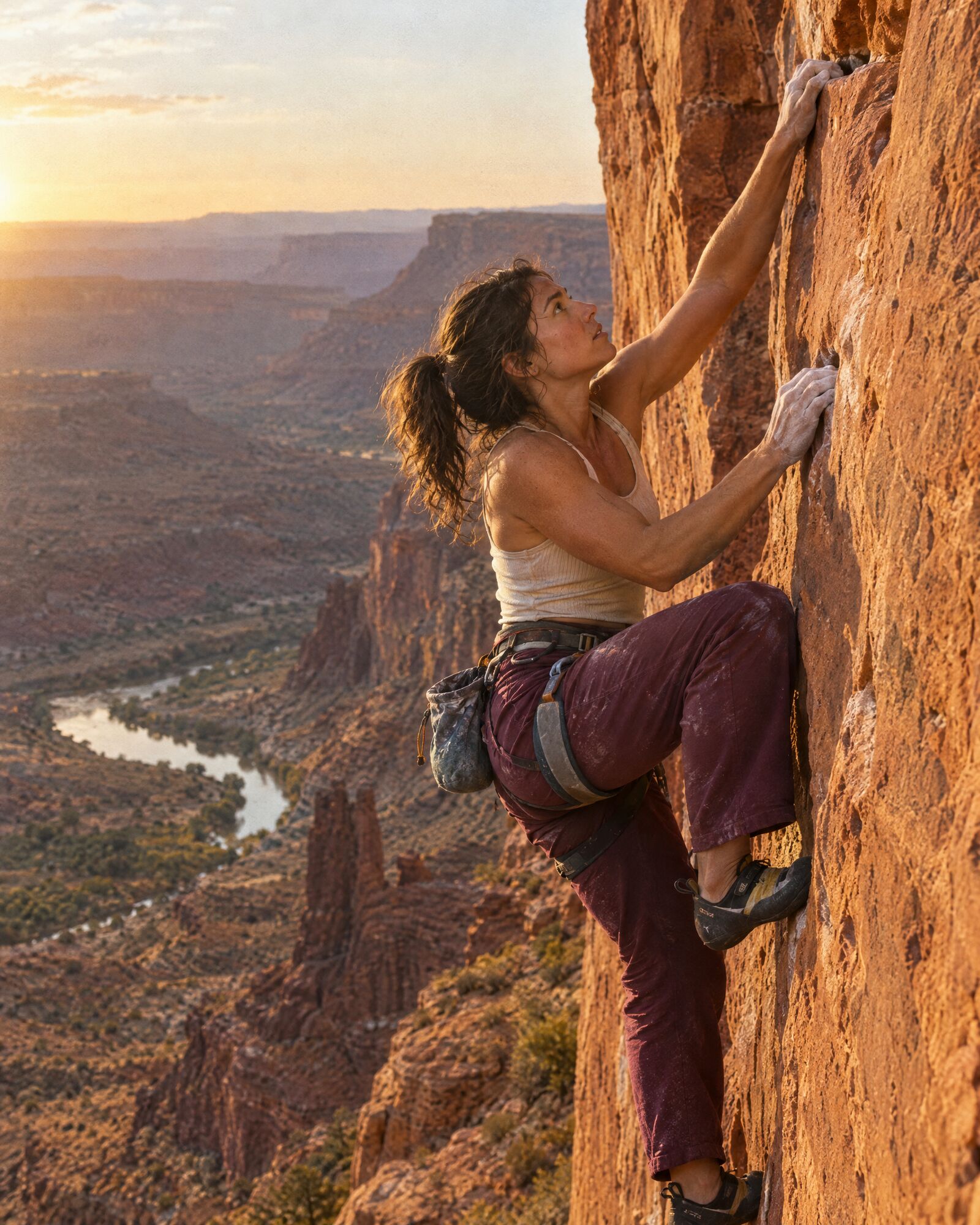
In the frame above, look at the climbing pants. The fabric gathers at the bent knee, pulls along the thigh on the high step, and the harness presses into the waistband instead of sitting on top of it. That is what makes them read as real clothing.
Why I care about this more than most
I spent more than ten years designing clothing and backpacks for an outdoor apparel brand, and fit sessions were a big part of that work. I have also shot outdoor gear in the conditions it is made for, including as the official photographer on a 2018 Everest expedition. I know how a shell sits on a ridge in wind, and how a pack strap changes the line of a jacket. That is the eye I bring to every set. There is more about my background here.
AI does the production. The fit check is mine, along with every logo, zip, seam and print, which are all hand-checked in Photoshop before delivery. You can see how that works for activewear on the AI product photography page, and what is included in the test set and monthly creative.
If you want to see your own garment fitted properly on an athlete in its real setting, start with a $200 test set: 6 images, one concept, within 3 days.
Quick answers
Why do clothes look fake on AI models?
Because the model fills in an average garment rather than yours. The usual giveaways are floating hems, no tension at elbows and knees, fabric that is too stiff or too soft for the material, and straps or harnesses that sit on top of the clothing instead of pressing into it.
How do I get accurate garment fit in AI product images?
Supply front, back and side photos plus any on-body photo, write a two-line fit note covering cut, fabric weight and length, choose poses that show what the garment is designed for, keep the athlete's build the same across frames, and check every image for fit before it is used.
Does garment fit in ad images really matter?
Yes. Fit is what shoppers are trying to judge, and in a 2023 Coresight Research survey of US apparel brands and retailers, size and fit was the top reason for online apparel returns. An image that misrepresents the cut sets an expectation the product can't meet.